
1500 sq ft workroom
This cordwood woodworking shop was constructed in 1973 with about $850 of UI winnings and the best of 5 barns and two houses I tore down that year. The construction was rudimentary and functional. I operated my first real woodworking cabinet shop from this facility until we sold the property in late 1981 on an adventure to live in New Zealand.
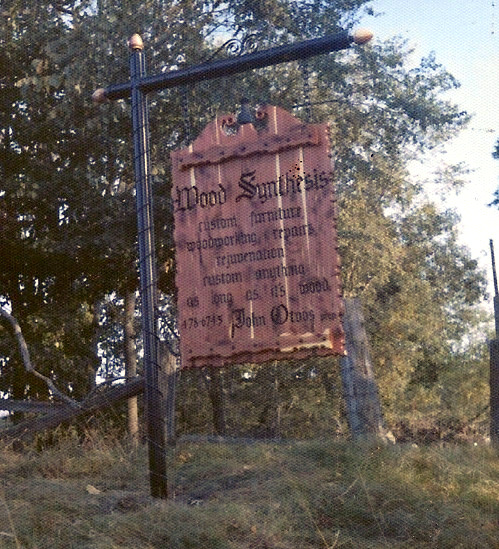
jayöh‘s first business name and sign
From my university philosophy days, I named the business Wood Synthesis. For those not schooled in such things, it works like this: thesis~antithesis~synthesis. Near the bottom of the sign, I carved my then tagline: custom anything as long as it’s wood. Synthesis has been my life-long karma. I no longer wrestle with what The Universe wishes of me.

taken in late 2008
Many kitchen cabinets, sofa frames, wingback mahogany show wood chairs, red pine fence posts for Glanmore House Museum in Belleville, ON
http://www.glanmore.org/glanmoreind.html
and other furniture items were produced here during that 9 year period. (9 is completion in numerology & time to move on)
These are a few contemporary images in the digital domain I snapped on a recent visit in Oct 2025.
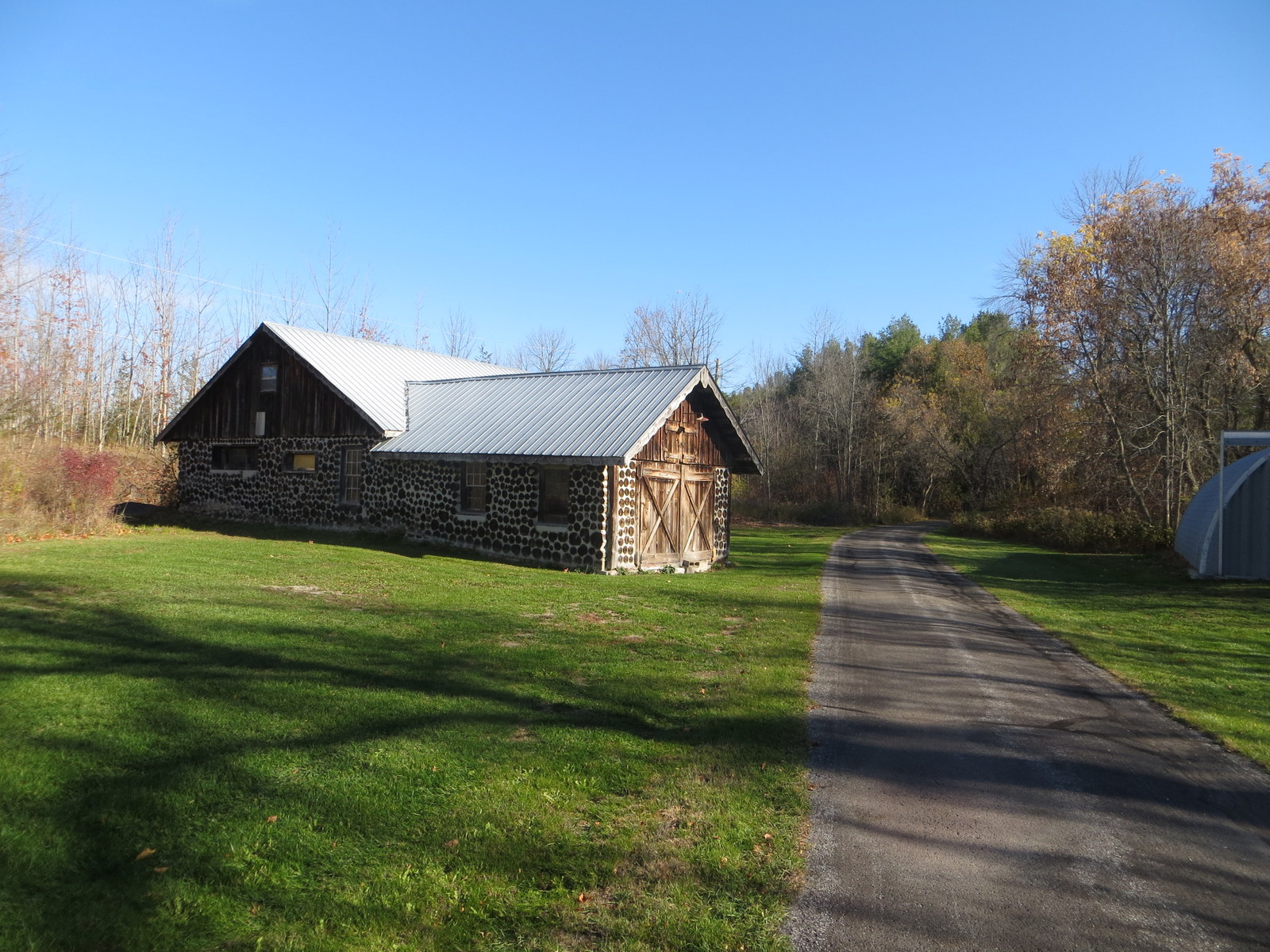
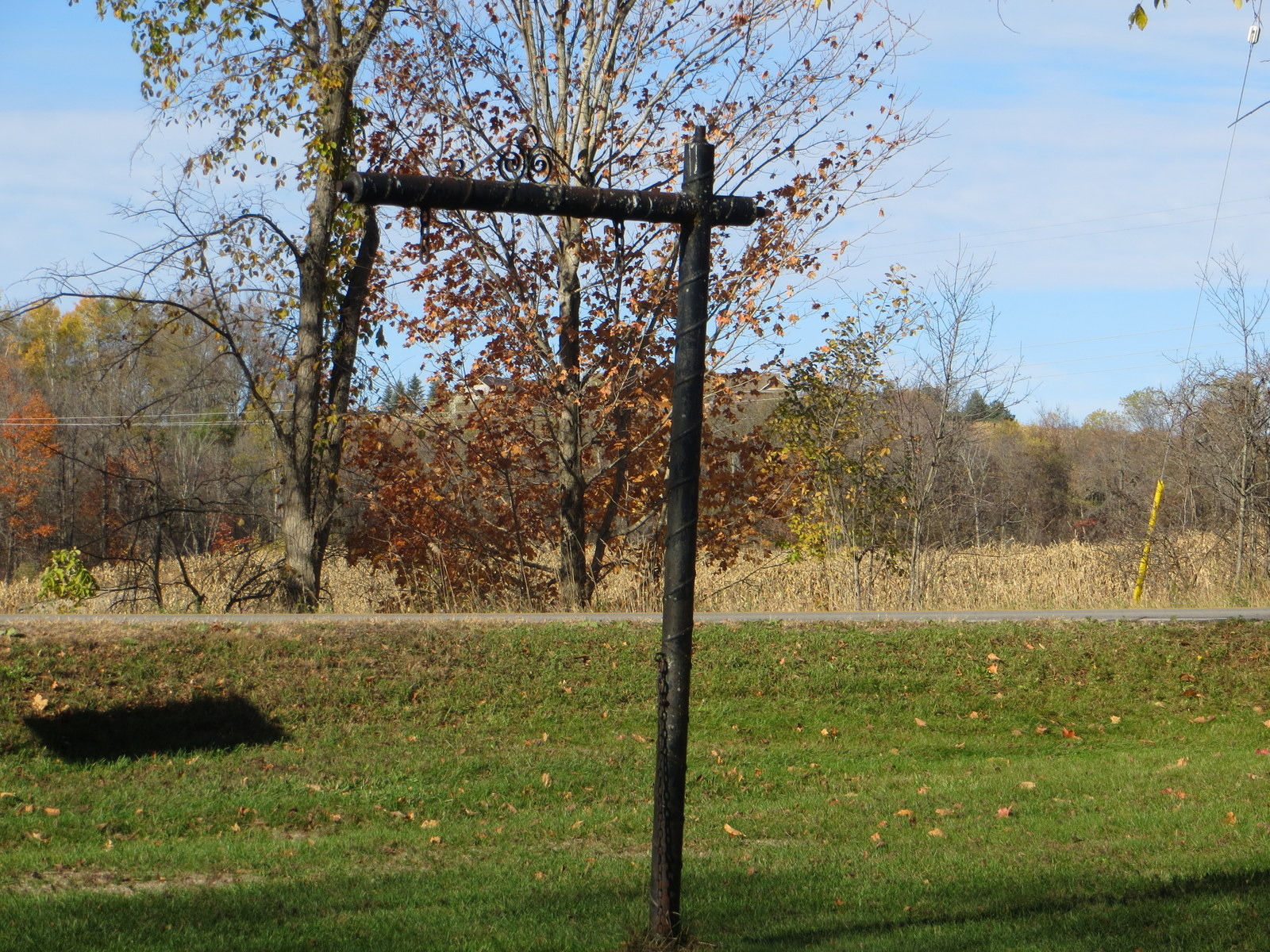
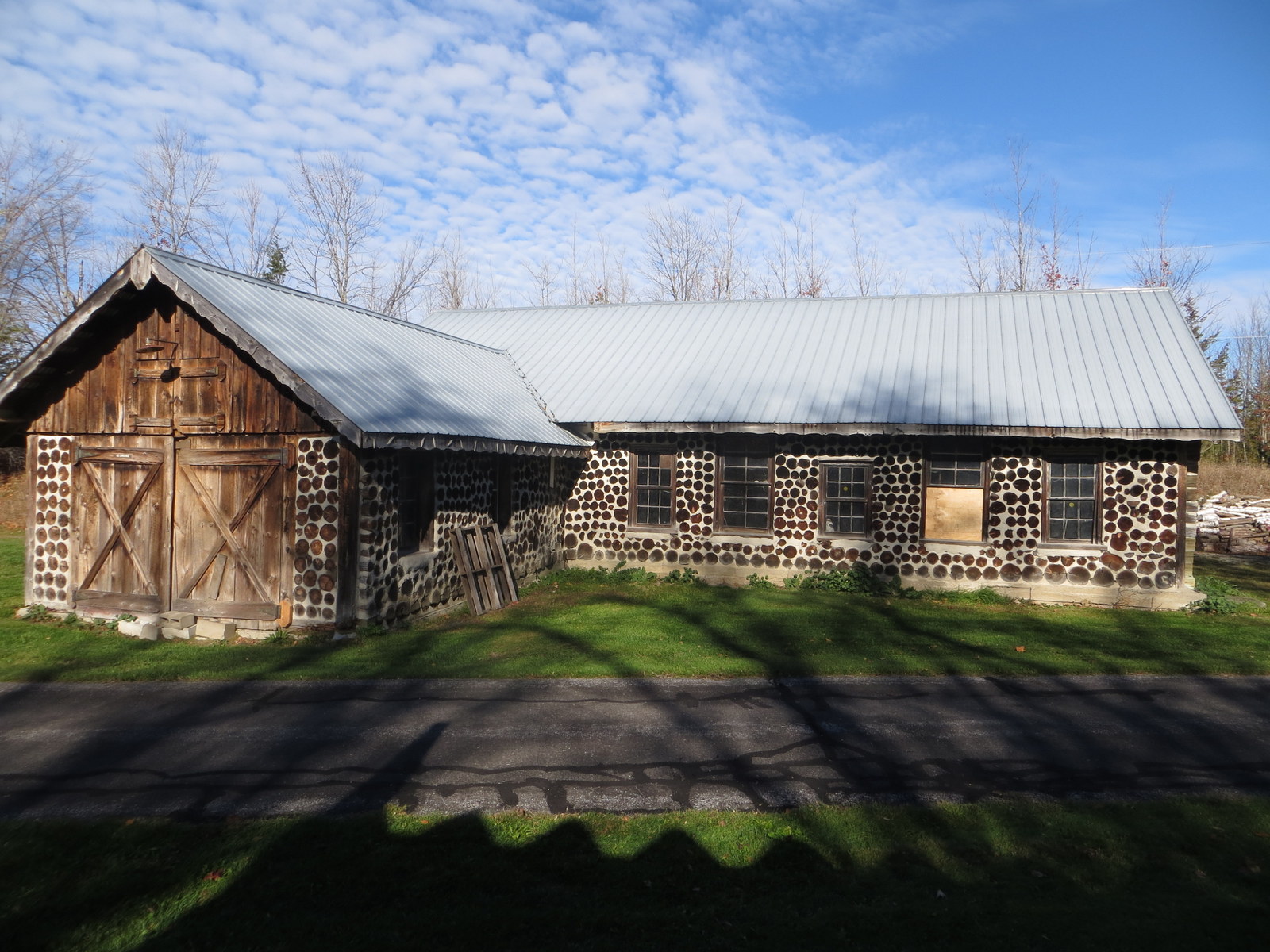
The building was hardly novel, since many cordwood structures were made in rural ON over the past 100 yrs. It was enough of a curiosity, though to garner a write up in the 1976 Harrowsmith magazine. It also won a posting in the first Harrowsmith Reader of 1977. http://www.harrowsmithcountrylife.ca/ As the magazine has undergone several ownership changes over the past 34 years, this article is not archived.
The galvanized steel roof shown here, is newly redone by the present owner.
The shop was constructed of disused telephone poles, highway guardrails and the poles from one abandoned log cabin. Steel roof was used. Only new lumber employed were the 2x6x20′ spruce rafters for the roof. Even the maple flooring was scrounged from an old school. I straightened many nails during the construction and that habit has stuck with me today, for better or for worse. I have both Jewish and Scottish blood coursing through my veins. I suspect that there must be some Dutch in there someplace too.

jayöh perched on a wooden ladder. . . what else?
Since much of the ‘cordwood’ was cedar, which develops a characteristic heart-check upon drying, I needed to insulate the inside. Once again ˜low velocity’ 2″ styrofoam was chosen. In those dayzes, it was likely only about R6. On top, I nailed 1/8″ masonite to cover the whiteness. The ceiling was insulated with styrofoam skins, which come off the 3′ thick bales before they are slit into sheets with a hot wire. As I said earlier . . . rudimentary. During that time, many of us had little evolved consciousness about the ecology of the planet, energy consumption, let alone conservation. That was to come.

She riseth
Heating was with an ancient, but extremely efficient cast iron furnace with twin circulating heat chambers on top of the firebox. The exterior un-insulated chimney was fabricated from 3 galvanized hot water tanks, welded on site by a local tradesperson. Baseboard heaters were pressed into action for overnight curing of finishes.

garage entrance for unloading dust collector bin
Up ’til now, all my buildings were fashioned with a fancy facer board. This one was a simple design with the cutouts on the board made in hard maple, from a job making paper cutters for the Domtar beer carton factory in Trenton, ON.
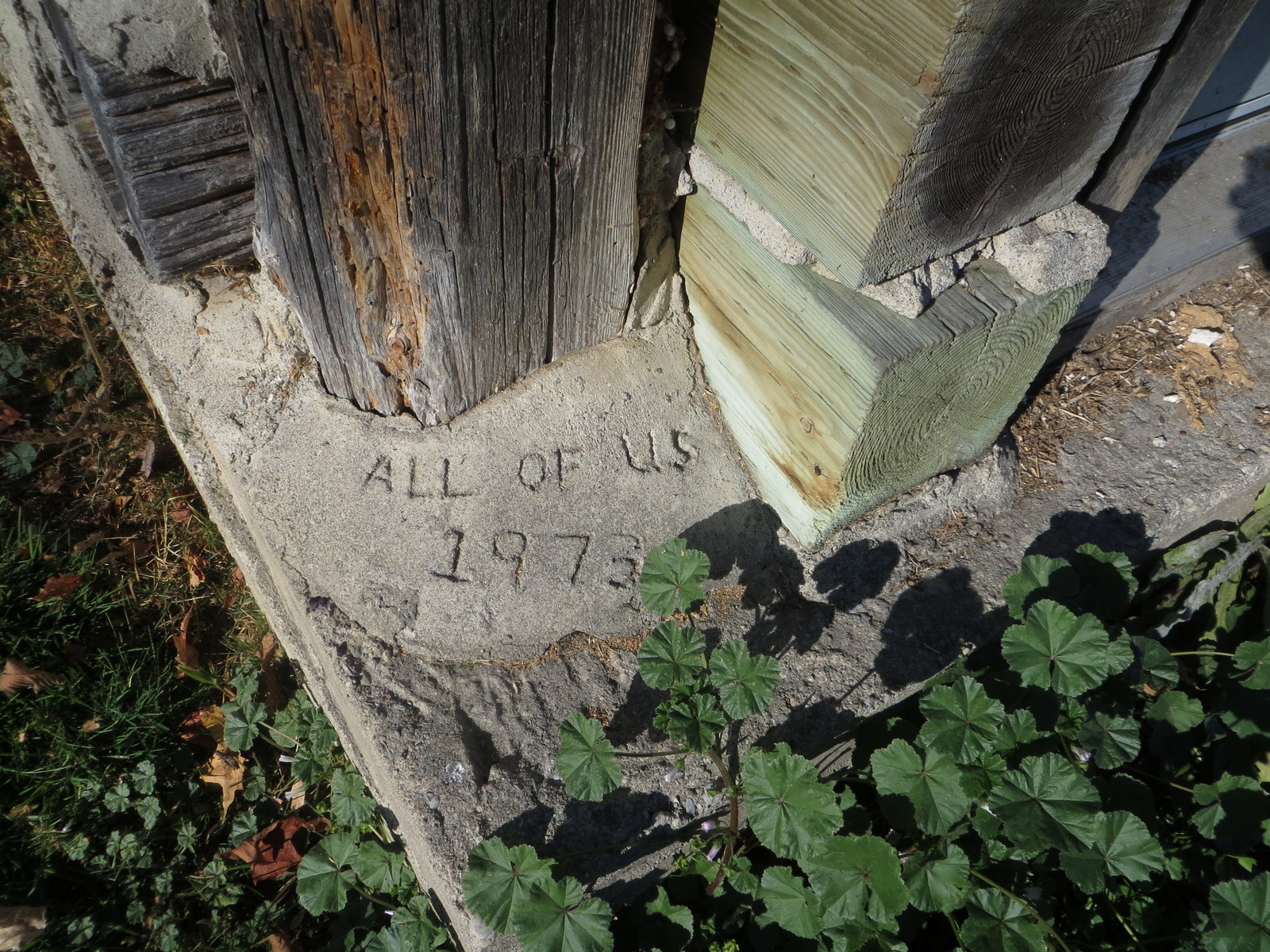
all of us
It was in this building that I made my first-ever loudspeakers that graced the cover of Speaker Builder magazine back in 1980. 2 pairs, 4′ high, constructed of 1″ solid red oak and red oak veneer.
All of the concrete and mortar were mixed in a portable self-driven mixer made and invented by an itinerant inventor named Sam Ray near Madoc, ON.
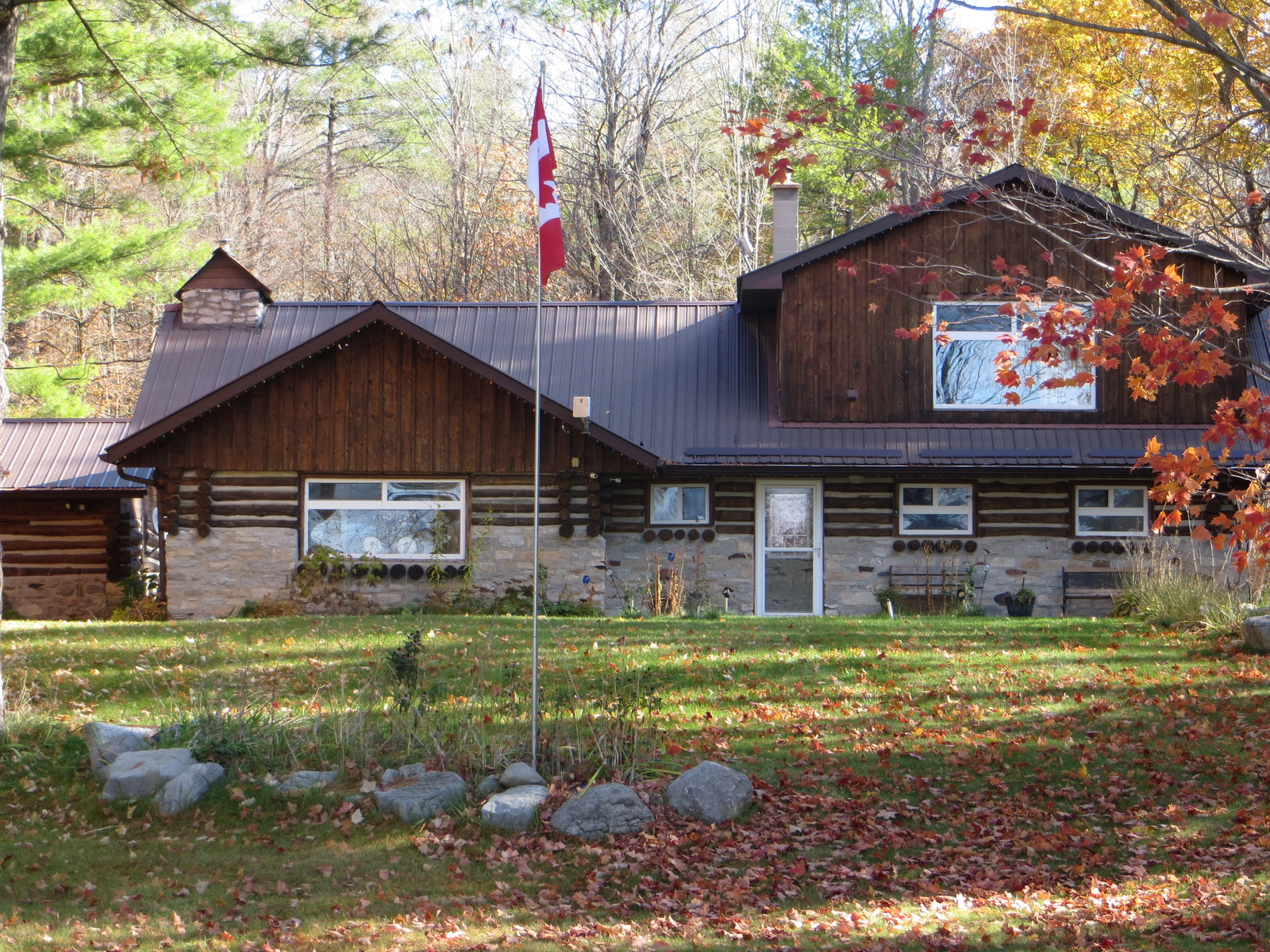
Sam Ray’s house
Sam’s home, with found stones at gravel pits and two rows of logs with his own ON white cedar shingles.
I paid the princely sum of $750 for it new and wished I’d kept it. We had a stream at the bottom of the hill, which was my water supply. Sam taught me much and inspired me to make my own cedar shingles with a taper jig on a bandsaw and wide blade. I am enormously indebted to him, now long deceased, but forever in my heart’s memory, for the essential goodness and kindness of the man. Later . . .
I am, John Ötvös aka jayöh.